Sleep can, for many, be a source of huge stress: you may experience difficulties falling to sleep, or prevented from having a restful night because of undue anxiety …
Here you can find useful tips to help you enjoy a peaceful night and have the benefits from a good night’s sleep.
Tip 1: Light
· Get sunlight during the day (preferably between 6-8.30am for at least 30 mins). This is when your body clock is most responsive.
· At night remove blue light:
Tip 2: Temperature

· Thermoregulation heavily influences your body’s sleep cycles.
· 15-20 degrees is ideal ambient temperature.
· Stress raises core temperature. Worrying about not sleeping contributes to insomnia psychologically and physiologically.
Tip 3: Timing
· Between 10pm-2am is where humans get the most beneficial hormonal secretions and recovery. Our stress glands (adrenals) rest and recharge the most between 11pm and 1am and melatonin production is highest 10pm to 2am.
· Regulate your circadian rhythms by going to bed at the same time each night.
Tip 4: Magnesium
· A central symptom of magnesium deficiency is insomnia and it does many things, among them, balances blood sugar, optimises blood pressure, relaxes muscles, calms nervous system.
· Transdermal: Epsom salt bath, magnesium oils.
· Food Sources: Dark leafy greens, nuts and seeds, avocado, fish (halibut, wild salmon, mackerel).
· Supplements: chelated magnesiums (those ending in ‘-ate’) tend to be the best absorbed. Magnesium Citrate is a good choice.
Tip 5: Air Quality
· Stale air has lost its negative charge.
· Fresh air carries ionic elements vital to health.
· Easy solution: regularly keep the windows open in the bedroom. If poor airflow through window, or cold winter, or bothersome night time light and noise from outside, then a negative ion generator energizes and freshens the air by providing it free electrons.
Tip 6: White Noise
· White noise is noise with an amplitude that is constant throughout the audible frequency range.
· In a process known in acoustics as ‘sound masking’, it blends external sounds into thewhite noise.
· Great for masking noises like barking dogs, neighbours’ TV, traffic etc.
Nightingale Smart Home Sleep System
Tip 7: Neuro-Association (Sleep Sanctuary)
· Create an environment where you associate the bedroom with one thing: Sleep. For that, remove all screens, electronic devices, work related references.
Tip 8: Quality Eye Mask & Ear Plugs
· Extra level of sound and light control.
Sleep Master Mask with Earplugs
Tip 9: Neurofeedback Technology
· Insomnia is the result of producing excessive beta brain waves. Then, neuro feedback machines assist you in training your brain to enter the alpha brain wave state associated with calm, peace and meditation. It works by allowing you to associate a change in your brain waves with a sound. Eventually you learn to alter your brain waves more readily, increasing your ability to calm your mind during nights of insomnia.
Tip 10: Meditation
· A common cause of insomnia is an inability to calm the racing mind. Meditation trains the mind to relax, taking your mind from beta brain waves down to alpha brain waves. It allows you to practice closing your mind from extraneous thoughts, bringing your mind repeatedly back to your breath. Research has shown those who meditate regularly can better control alpha brainwaves; that is, to maintain a deep and relaxed focus.
Tip 11: Food, Alcohol, Physical Training
· Food: Don’t eat directly before going to bed; go to bed not hungry, but a little peckish. Thus avoiding the possibility of a blood sugar drop after you fall asleep (which would up regulate cortisol and down regulate melatonin)
· Alcohol: Although it can relax you and help you fall asleep, it can wake you up during the night and prevent you from ‘delta’ slow wave sleep.
· Physical Training: Not too late at night because it raises your core temperature which may hinder falling asleep.
Tip 12: Manage Sleep Performance Anxiety
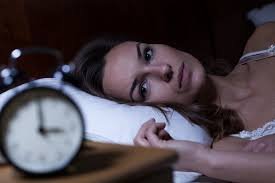
· If this is not managed, all previous tips will probably have limited effect.
· If you’ve come to a point where you believe falling asleep will be difficult, it can become a self-fulfilling prophecy. It is this false belief that causes anxiety, which in turn raises your core temperature, heart rate, blood pressure, and makes it next to impossible to fall asleep. This in turn makes you more anxious as the hours tick by, making sleep even less likely.
How to Break This Cycle?
· Don’t try to fall asleep. Trying to fall asleep is like trying to be spontaneous. Some things cannot be forced. Focus on relaxing and keeping a cool internal state.
· Attitude is everything: have a totally blasé attitude towards getting to sleep. This takes the pressure off, relaxes your mind by removing the anxiety, thus opening the ‘sleep-gate’.
· Indicate the stress of worry about not sleeping is far more damaging to your body than lack of sleep itself.
· One of the few evidence-based treatments for insomnia is Paradoxical Intention Therapy. That is: trying to stay awake as a means of falling asleep.
· What you tell yourself mentally throughout a night of insomnia is what you get the next day :“I’ll feel terrible tomorrow; I’ll be totally unable to cope” sets the scene for this to eventuate, “I’ll be fine, plus I’ll sleep really well tomorrow night” sets the scene for this to eventuate
Tip 13: Dr Parsley’s Sleep Remedy
· He was a Navy Seal in the US Military.
· He is an MD and ‘undersea medical officer’ at the Naval Special Warfare Unit, and expert of sleep medicine.
· He refined a sleep formula during his many years with the seals. It was so successful with them, it’s now been made available to the general public.
· It’s not a drug, but a combination of nutrients involved in the production of melatonin: L-tryptophan, 5HTP, Vitamin D3, Magnesium, GABA derivative etc· It doesn’t ‘knock you out’ like a sleeping tablet. Your body does the work; it just provides the body the nutrients it needs. There is no hangover, no addiction.
- The Carousel would like to thank James Gleeson for this article. He is a Personal Trainer at Tribe Social Fitness, Sutherland Shire, Sydney.
https://womenlovewellness.com/health/fitness/midnight-yoga-beat-insomnia-part-4/