For years, Professor Hosen Kiat met his patients at the wrong end of the story. By the time they reached his rooms, they needed a bypass, a stent or an electrical fix. “The disease that I’m treating most of the time, by the time they are in front of me, that disease has started decades before,” he says.
The moment it hit home was deeply personal. “One day I had to resuscitate my own dad in the hospital, because I was the only cardiologist at that time. That really shook me.”
So Dr Kiat, formerly Director of Imaging Research at Cedars-Sinai Medical Center in Los Angeles, changed course. About 10 to 15 years ago, he moved into preventive cardiology, backed by more than 200 peer-reviewed publications and a ranking in the top 1% of clinical medicine researchers worldwide in Stanford University’s global rankings.
His reasoning is simple: “As we get older, prevention becomes even more relevant, because anything that happens to us takes so much longer to recover from, it doesn’t matter what it is, from a fall to a strain.”
What he’s built is less a program than a set of acronyms, and they’re easier to remember than most health advice. The first is the one that holds everything else together.
CV: consistency and variety
Forget the resume. In Kiat’s clinic, CV stands for Consistency and Variety, and it’s the message he gives every patient.
“You don’t need to be perfect. Just be consistent, slowly, bit by bit, and apply variety to almost everything, from food to movement, from friendshipsto the different types of rest.”
Miss a day? “Don’t get frustrated. It’s okay. As long as it’s consistent, and you try.”
That idea of small, repeatable habits is the engine behind his second acronym, which applies it to five areas of life.
PRIME: the five habits
Beyond CVs, PRIME is Dr Kiat’s framework for health and longevity: Purpose, Rest, Interaction, Movement, Eating.
He starts with the one that is easiest to overlook.
P is for Purpose. It comes first for a reason. “Always find a meaning, find a purpose. To me, that’s the strongest driver to live.” He says the research is clear: “If you have no purpose, based on research, you’ll die young.”
He sees it at home, too. “On the days that my wife goes babysitting, she’s never sick. If she has to babysit three days a week, she’s healthy for three days. She’ll always get sick on the days she doesn’t babysit. Why? Because the purpose drives her to be healthy. The whole body is geared for meaning.” And it doesn’t need to be grand. “We change our purpose all the time.”
A reason to get up in the morning is only half the equation, though. The other half is what you do when the day ends.
R is for Rest. “It is through rest that we restore health,” says Kiat, noting that athletes “deload before competition.” His menu is flexible: “20 deep breaths in the middle of the day, a siesta like in Italy, or eight hours of good sleep hygiene at night, and don’t eat for two hours before bed.”
Rested and purposeful, the next step is to spend that energy on other people.
I is for Interaction. His verdict on isolation is blunt: “If you isolate, you’re done.” He also has a theory about why men skip check-ups. Women, he says, build familiarity with doctors through “contraception, the pap smear, the children, the pregnancy,” whereas for men, “seeing doctors is like going to court.” Connection, in other words, includes the relationship you have with your own health.
Which brings him to the most physical of the five.
M is for Movement. “Movement is freedom. If you can move, you’re freer than not moving.” His bar is refreshingly low: “Any movement is better than none, and fidgeting is also fine.”
The catch is that we lose five things as we age, and he says all five need attention: cardiopulmonary fitness, strength, flexibility, agility and stability. “Even these big footballers, we train their agility, flexibility and stability, plus, of course, their strength and cardiopulmonary fitness.” Kiat fits all five into a weekly fit boxing session.
Movement is the output. What goes in is the last letter, and the one Kiat treats as the foundation.
E is for Eating. And a perfect segue into the third acronym: WFPB, or whole food, plant-based. “Eating is truly the base, which is the fuel for your car. If the fuel isn’t right, your car won’t run well. So take a seat and eat a rainbow.”
Variety is the point. “There’s absolutely no one single best food to eat. In fact, the more variety, the healthier you become.” And he’s no purist. “I aim for Whole food, Plant-based,” he says. Before noting that this does not mean vegan.
“It’s just plant-based. You can throw in kangaroo, you can throw in some wagyu, it doesn’t matter. It’s not going to hurt you.”
His practical guidelines:
- Protein: “One gram per kilogram per day is proven scientifically as an average intake for health. As you get older, you probably increase it to about two grams per kilogram per day.”
- Heat: Cooking at lower temperatures matters. “The higher the heat, the more AGEs, advanced glycation end products, that literally age you.”
- Saturated fat: It depends on your cholesterol. “If you have cardiac conditions, animal fat, which is mainly saturated fat, it’s not going to do you much good. It is going to accelerate the elevation of the LDL cholesterol.” But if your numbers are excellent, “It’s fine.”
That last point, knowing your own numbers, is where his advice gets most specific for women.
The check-up women shouldn’t skip
For women over 55, this is the part to underline. “Women are often missed in screening, because most people have that perception that women don’t get heart disease, but they do.”
His marker is menopause. “I always say menopause should be the gate when you start having regular checks for cardiac health.” Hormones are protective beforehand, but the advantage fades. “Ten years after menopause, the risk of a woman’s heart disease is exactly the same as men’s.”
He also wants women to speak up about their history. Gestational diabetes, preeclampsia and polycystic ovarian syndrome (PCOS) are often overlooked as risk factors. “If women have had these experiences earlier in their lives, they should make sure doctors know.”
Put the habits and the check-ups together and you get a picture of what a long, well-lived life looks like. Kiat has seen it in person.
What the Blue Zones get right
A recent week in Sardinia, one of the world’s Blue Zones, reinforced Kiat’s theory. “I can assure you, the Blue Zones truly practise PRIME.”
He saw women in their 80s “literally taking 20 minutes walking up the stairs. Even though it’s slow, they still do it.” The food isn’t perfect, since there’s smoked ham, “but they have the variety. Every lunch is always many dishes. No one eats a chunk of 400 grams of steak.”
The overall pattern is “very, very plant-based,” and movement is built into daily life: “There’s no supermarket at all. There’s only little markets. They have to move.”
None of it requires a subscription, a supplement or a viral trend, which is exactly why Kiat is wary of the ones that promise otherwise.
How to see through a wellness claim
With every trend promising miracles, Kiat’s filter is simple. Start with whether there’s a regulatory health claim. Beyond that, “ask who is saying it, what’s the credential behind that person, and what’s the evidence behind it?”
His shortcut for patients: “Who told you it’s good? Is it a mechanic, or is it a cardiologist?”
He’s also relaxed about fads, with one condition: dose. “Any habit, if you take it to the extreme, it will be more dangerous than not.” Cold plunges are his example. For a healthy person, “a cold plunge of a certain amount probably has benefits, for sure.” But with a heart condition and a 20-minute soak, “it may tip you over.”
It’s a test he applies to his own work, too, including the small, everyday product that came out of his love of coffee.
Where the coffee comes in
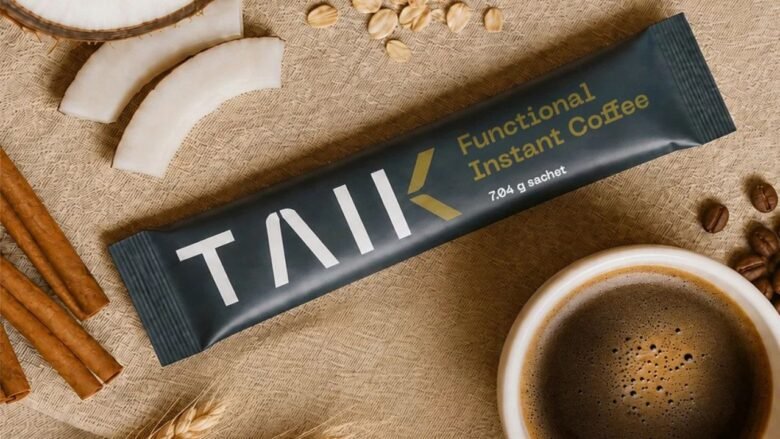
A lifelong coffee lover, Kiat used to drink “three or four cups of double espresso every day.” That habit became TAIK Functional Instant Coffee, the first product from the longevity platform he co-founded.
He’s candid about the scope. “It’s certainly not magic. I can say it is my, as a cardiologist, daily little ritual for my health, and if you want to follow that, it’s fine.”
The sachet combines Robusta coffee with Ceylon cinnamon, coconut-derived MCTs (“an instant fuel, just a little extra”) and oat beta-glucan, a soluble fibre. The oat link is one of the best-known in nutrition: when eaten daily as part of a diet low in saturated fat, oat beta-glucan can help reduce blood cholesterol. “Everyone knows oats, low cholesterol,” says Kiat. “It’s a no-brainer to add a little bit of it, just to help your cholesterol level.”
Each serve has 140mg of caffeine (“one double espresso worth”), 2.3g of dietary fibre and a 5 Health Star Rating. A box of 10 is $29.99. If you’re doing intermittent fasting, note that “it has calories,” so it’s “not truly fasting.”
It’s best understood as a small, familiar habit within a larger set. And that’s the real PRIME takeaway: simple things, done consistently, with variety, for a very long time.