Ask around and you’ll find no shortage of opinions on acupuncture. Some people swear by it, others dismiss it as a placebo dressed up with needles, and plenty simply aren’t sure what to believe. So to set the record straight, we sat down with Kim Gatenby, Deputy Chair of the Australian Acupuncture and Chinese Medicine Association (AACMA) and a registered Chinese medicine practitioner of more than 20 years, to unpack the five biggest acupuncture myths she hears … and what’s actually true.
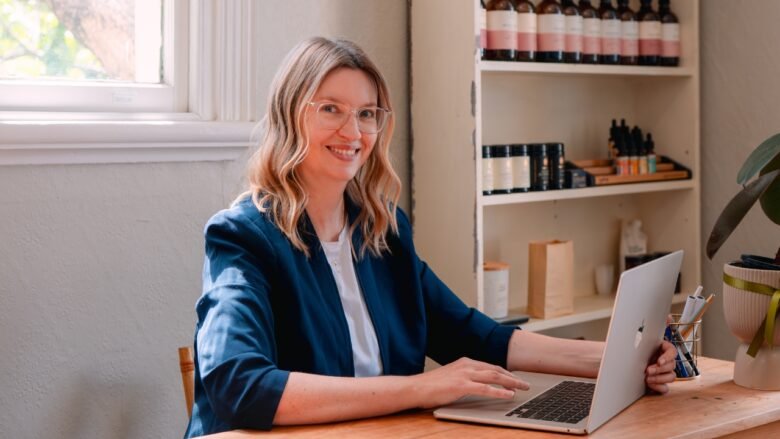
Gatenby, who is based in Port Macquarie and Wauchope, NSW, specialises in women’s health and reproductive medicine and holds a Master of Reproductive Medicine. As she puts it, Acupuncture Awareness Month (this September) exists “to help Australians better understand the practice and the profession behind it.”
Here’s what she wants you to know.
1. “Acupuncture isn’t real medicine”
This is the big one. But in Australia, Chinese medicine is a nationally regulated health profession, and the law protects the title “acupuncturist.” That means anyone calling themselves an acupuncturist has completed years of university education and clinical training – it’s not a title you can simply adopt.
There’s also genuine science behind how it may work. As Gatenby explains, “acupuncture can certainly seem like magic, but research has identified several possible scientific explanations for how it may work.” Needle stimulation appears to activate sensory nerves that send signals through the spinal cord to the brain, which can trigger the release of endorphins and other natural pain-relieving chemicals, while also influencing the autonomic nervous system – the system responsible for heart rate, stress responses and blood flow. Functional brain imaging studies have even picked up changes in the areas of the brain linked to pain, emotion and sensory processing during treatment. Researchers are still working out exactly how it all fits together, but “not real medicine” doesn’t hold up.
2. “It’s just about the needles”
Acupuncture is often reduced to “getting stuck with needles,” but that misses the bigger picture. It’s part of a whole diagnostic system, one that looks at what’s out of balance in the body rather than simply naming and treating a disease in isolation. The goal is to address the underlying imbalance, with the practitioner tailoring the approach – including how many needles they use and where they place them – entirely to the individual.
In fact, Gatenby points out that more needles doesn’t mean better results: “There are acupuncture styles that involve using only one or two needles. This can be great for people who are a bit nervous about acupuncture.” As she puts it plainly, “the number of needles is not a measure of treatment quality. Treatment is always individualised.”
3. “It’s only for pain”
Pain relief – particularly for chronic lower back pain, knee osteoarthritis and neck pain – is where the evidence for acupuncture is strongest, along with migraine prevention, tension headaches, and nausea related to surgery or chemotherapy. But pain isn’t the whole story. People seek acupuncture for a much broader range of concerns, and practitioners increasingly use it alongside conventional healthcare rather than instead of it.
That said, Gatenby is clear that acupuncture has a supportive, not curative, role in serious conditions: “the evidence shows that acupuncture may help reduce chemotherapy induced nausea, but it is not a treatment for the cancer itself.” A touch of healthy scepticism, she says, is a good thing, because “this can prompt you to ask questions about how much acupuncture may help with the condition for which you are seeking treatment.”
4. “It’s the same as dry needling”
Both dry needling and acupuncture involve inserting fine needles into the body, so it’s easy to see why people conflate the two. But they’re not interchangeable. Registered acupuncturists complete years of dedicated study and clinical training, and Australian law protects the title “acupuncturist” – someone who performs dry needling doesn’t necessarily hold that registration.
This matters when it comes to choosing who treats you. Gatenby’s advice: look for a registered practitioner, ideally one with experience in the specific area you need help with, and don’t be afraid to ask questions about their approach. As she puts it, “it’s important to feel a sense of safety with any health practitioner you choose and to feel confident asking questions about the proposed treatment, possible risks and alternatives.” Red flags, she warns, “may include someone claiming to be an acupuncturist who is not registered, guaranteeing a cure, discouraging appropriate medical care, pressuring you into an extensive treatment plan or being unwilling to clearly explain their approach.”
5. “It doesn’t fit into modern healthcare”
Rather than replacing modern medicine, acupuncture increasingly works alongside it – complementing the care you receive from your GP, specialists and allied health team. As Gatenby says, “acupuncture can work alongside the care you already receive from your GP, specialists and other allied health practitioners.” She’s firm, though, that “acupuncture should not delay necessary diagnosis or treatment, and any changes to prescribed medication should always be discussed with the practitioner responsible for that medication.” A good acupuncturist will also refer you elsewhere if your condition falls outside their scope.
What about the fear factor?
If the idea of needles has been putting you off, it’s worth knowing that “the needles are a lot smaller than hypodermic needles used for blood tests or immunisations, so they are less likely to create a pain response,” Gatenby says. Most people describe the sensation as gentle – sometimes nothing at all, sometimes a brief prick, and sometimes a heavy or tingling feeling known as “de qi.” If you’re nervous, tell your practitioner; as Gatenby says, “your practitioner wants you to feel comfortable the whole time.”
As for risks, informed consent is key. Before treatment, a registered practitioner should walk you through common side effects like temporary discomfort or minor bruising, plus rarer risks such as fainting, infection or a retained needle. In two decades of practice, Gatenby says: “I haven’t encountered these rare adverse events in my own practice.” But, she adds, “informed consent means explaining the possible risks and discussing the steps taken to reduce them as much as possible.”
The bottom line
Acupuncture isn’t magic, and it isn’t a cure-all – but people sometimes portray it as far more mysterious or fringe than it really is. It is a regulated profession backed by ongoing research. Approach it like any other healthcare decision: stay curious, ask the right questions, and choose a practitioner you trust.
If you’re considering it, Gatenby’s advice is simple: find a registered acupuncturist, ask whether they commonly treat your specific concern, and use that first appointment to talk through your health history and what you’re hoping to achieve. AACMA’s Find a Practitioner tool is a good place to start if you’re not sure where to look.