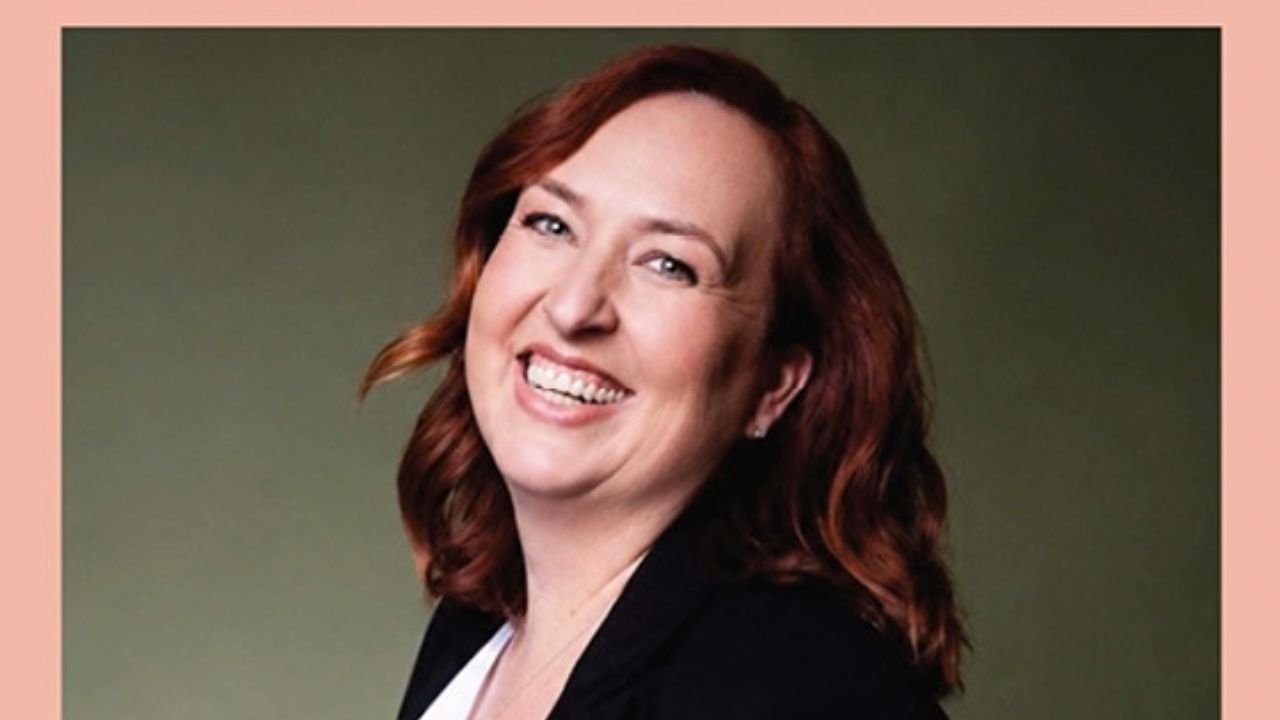
In this deeply personal extract, Kate Gale reflects on the complicated relationship between identity and illness, and what happens when a cancer diagnosis becomes part of the way others see you. After being dubbed “Cancer Kate” by a friend, Gale spent years resisting the label, only to eventually realise that accepting cancer as part of her story didn’t mean allowing it to define her.
A friend once called me “Cancer Kate”. I hated it. Years later, I finally understood why learning to live with her became part of learning to live with myself.
There is a strange thing that happens when you have cancer: your diagnosis can become your identity long before you have had time to process what it means.
For years, I was simply known as Kate, until one day a close friend referred to me as “Cancer Kate”.
At first, I was taken aback. I didn’t know how to react, but I did know, I hated it. Cancer was something that had happened to me. It wasn’t who I was. Yet somehow, the word had attached itself to my name, becoming an unofficial prefix.
Kate became Cancer Kate.
I wanted people to see me beyond the diagnosis. I wanted to be the woman I had been before cancer, not the patient, not the survivor, not the inspirational story.
Eventually, though, I began to wonder whether I really had to choose between Kate and Cancer Kate. Perhaps I could learn to live with both.
My first cancer diagnosis came when I was just 27. At an age when most people are thinking about careers, relationships, travel and what the next decade might look like, I was thinking about scans, surgery and survival.
Cancer arrived and immediately changed the trajectory and vocabulary of my life.
Words like oncologist, chemotherapy, remission and recurrence became part of my everyday language.
But the biggest change wasn’t just what cancer did to my body. It was what it did to the way other people saw me and, eventually, the way I saw myself.
Some people treated me as fragile. Others treated me as inspirational.
I became the person who had “been through so much”.
There was an assumption that cancer had somehow transformed me into someone stronger, wiser and more grateful.
The truth was much messier.
Sometimes I was strong. Sometimes I was terrified. Sometimes I was angry. Sometimes I didn’t want to be inspirational. I just wanted to complain. And sometimes I wanted to forget about cancer altogether.
But cancer doesn’t always allow you to forget.
Even when treatment finishes, the word can stay. It follows you into medical appointments, birthdays, anniversaries and routine check-ups. It can sit quietly in the back of your mind when you are trying to enjoy an ordinary day.
Then life found another way to remind me that cancer was part of my story.
My husband was diagnosed with cancer in 2012 and, in 2023, I was diagnosed with acute lymphoblastic leukaemia.
Suddenly, cancer wasn’t a chapter I had closed. It was woven through the story of my life.
No wonder I had become Cancer Kate.
For a long time, I fought that label. I wanted nothing more than to say: I’m more than this.
And I am.
But I’ve also come to understand that being more than my cancer doesn’t mean pretending cancer isn’t part of me. That distinction took me years to learn.
I used to think acceptance meant surrender. I thought if I accepted the label, I was allowing cancer to win. I thought I had to separate myself completely from the word in order to reclaim my identity.
Now I see it differently.
Acceptance isn’t saying, “Cancer defines me.”
It’s saying, “Cancer is part of my story, but I get to decide what that story means.”
There is power in that.
So I’ve slowly learned to live with Cancer Kate. Not because I particularly love the name, but because I no longer fear what it represents.
Cancer Kate has seen things I never wanted to see. She has learned how quickly life can change. She has discovered that resilience isn’t always about being positive. Sometimes resilience is getting through a terrible day and admitting that it was terrible.
She has learned that survival isn’t a straight line.
And she has learned that you don’t have to be grateful for cancer to be grateful for your life.
Perhaps that is one of the biggest misconceptions about cancer survivors: that once treatment ends, you return to who you were before.
You don’t.
I spent years trying to find that woman again.
Eventually, I realised she wasn’t waiting somewhere in the past. I had to step forward and meet the woman I had become.
That woman was different.
She carried fear alongside hope. She understood that ordinary days are anything but ordinary. Andshe knew that life could be brutally unfair and still incredibly beautiful.
She laughed more loudly. Loved more fiercely. Worried less about what other people thought.
I still don’t want cancer to be the first thing people know about me.
I’m Kate.
I’m a wife, a mother, a friend, an author, a speaker, a woman who laughs, gets angry, gets things wrong, changes her mind and occasionally eats chocolate for breakfast.
I’m also a woman who has had cancer.
So perhaps “Cancer Kate” isn’t a name I need to run away from anymore.
Perhaps I can wear it differently, not as a label that diminishes me, but as one chapter in a much bigger story.
For years, I thought finding myself again meant getting back to the Kate I was before cancer.
Now I know better.
I wasn’t lost.
I was changing.
And learning to live with Cancer Kate was, unexpectedly, part of learning to love the Kate who survived.
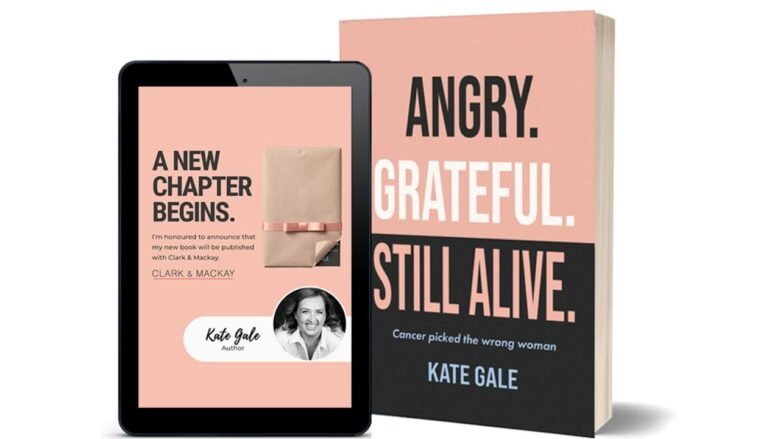
Kate Gale is author of Angry. Grateful. Still Alive. Out now with Clark & Mackay.